
Jan 05, 2026
Jan 22, 2026
Discover low-investment, high-return business models that are trending in 2026, from local manufacturing to digital services, suited for aspiring Indian entrepreneurs.
Authored By FlexiLoans | Date: 05/01/2026
- Quick Summary
- What: A curated list of the top 10 most profitable business ideas in India for 2026, covering both product and service-based models.
- Why: Helps aspiring entrepreneurs choose ventures with high ROI, low startup costs, and strong market demand.
- Who: Ideal for side-hustlers, solopreneurs, women entrepreneurs, and small-town founders with ₹25K–₹2L investment capacity.
- How: Each idea includes profitability insights, capital requirements, and success tips based on 2026 trends.
- Use Case: Great for business planning, evaluating new income streams, or pivoting an existing MSME model.
In 2026, profitability remains a key priority for small businesses across India. MSMEs that combine lean operations with digital reach and local demand are seeing stronger resilience, even amid changing economic conditions. Business models that focus on efficiency, repeat demand, and scalable execution continue to outperform capital-heavy ventures.
That’s why we’ve curated this list of the Top 10 Most Profitable Business Ideas in India. These are practical, time-tested models with favourable margins, low overheads, and demand across both urban and semi-urban markets.
Whether you’re launching a new business, expanding an existing MSME, or exploring an additional income stream, this guide is designed to help you choose wisely and build profitability sustainably.
1. Digital Coaching or Online Skill Classes
Why it’s Profitable: The rise of remote work, upskilling trends, and ed-tech platforms has made online teaching one of the most scalable, low-investment business models in India.
Target Market: Working professionals, school/college students, and Tier 2/3 city learners seeking affordable, flexible learning.
Investment: ₹30,000 – ₹1 lakh
Profit Potential: 70–80% margins; recurring income from subscriptions or live classes.
Success Drivers:
- Growing demand for competitive exam prep, communication skills, and job-oriented tech training.
- Platforms like Zoom, Google Meet, and UrbanPro make it easy to reach a wide audience.
- Minimal infrastructure required — just a laptop, webcam, and domain expertise.
Pro Tip: Bundle live classes with recorded modules to maximise passive income.
Related: Want to set up a digital coaching MSME? Check out our 15 Best MSME Business Ideas for 2026 for a full how-to guide.
2. Paper Bag Manufacturing
Why it’s Profitable: With growing environmental awareness and plastic bans in multiple Indian states, the demand for eco-friendly packaging is soaring.
Target Market: Retailers, grocers, food delivery businesses, and e-commerce players.
Investment: ₹75,000 – ₹2 lakhs (for a basic semi-automatic machine)
Profit Potential: High – bulk B2B orders and low per-unit cost mean great margins.
Success Drivers:
- Green compliance mandates give recurring orders.
- MSMEs can avail subsidies or low-interest loans to set up units.
- Easy scalability from manual to semi-automatic or fully automated production.
Pro Tip: Use recycled kraft paper to keep costs low and margins higher.
3. Print-on-Demand (POD) Custom Products
Why it’s Profitable: Personalised T-shirts, mugs, journals, and gifts are a booming niche, especially among Gen Z and online-first consumers.
Target Market: College students, fandoms, remote workers, and gifting businesses.
Investment: ₹25,000 – ₹70,000 (for basic design tools and platform setup)
Profit Potential: 40–60% margin on each product depending on niche and targeting.
Success Drivers:
- POD platforms like Printrove, Blinkstore, and VistaPrint handle inventory and logistics.
- Low overhead: you only pay when you sell.
- High emotional value of personalised items makes pricing flexible.
Pro Tip: Focus on regional quotes, youth memes, or trending hashtags to go viral faster.
4. Cloud Kitchen or Tiffin Service
Why it’s Profitable: As food delivery apps become a staple, small kitchens can now thrive without a storefront. Low capex, recurring daily orders, and niche cuisine focus make this a top business model.
Target Market: Working professionals, students, busy households, and health-conscious individuals.
Investment: ₹40,000 – ₹1.5 lakhs (setup, licences, basic kitchen equipment)
Profit Potential: 30–50% profit margins, depending on scale and volume.
Success Drivers:
- Platforms like Zomato and Swiggy provide ready access to customers.
- Home-style food and healthy tiffin options are in high demand.
- MSMEs can start from home and expand to commercial kitchens.
Pro Tip: Offer meal subscription plans to improve customer retention.
5. Affiliate Marketing or Niche Blogging
Why it’s Profitable: With the rise in e-commerce and SaaS products, content creators can earn consistent passive income by recommending products via affiliate links.
Target Market: Online shoppers, software buyers, DIY enthusiasts.
Investment: ₹10,000 – ₹30,000 (for domain, hosting, SEO tools)
Profit Potential: High — top affiliates earn ₹25,000 to ₹2 lakhs/month.
Success Drivers:
- SEO-driven blogs, newsletters, or YouTube channels offer compounding returns.
- Amazon, Flipkart, and SaaS platforms offer attractive commissions.
- No inventory or customer service needed.
Pro Tip: Choose underserved micro-niches (e.g., “eco-friendly kitchen tools”) to stand out.
6. Customised Gifts and Event Decor
Why it’s Profitable: India’s celebration culture is recession-proof. From birthday hampers to wedding décor, the need for personalised gifting and décor is booming.
Target Market: Urban consumers, corporates, and event organisers.
Investment: ₹30,000 – ₹1 lakh
Profit Potential: 50–100% markup depending on occasion and complexity.
Success Drivers:
- Instagram and WhatsApp enable low-cost marketing.
- High demand during festivals and wedding seasons.
- B2B bulk gifting orders (corporate Diwali hampers, for example) drive volume.
Pro Tip: Start as a home-based unit with limited SKUs, then scale with a vendor network.
Related: Plan Your Launch with Confidence: Refer to our MSME Loan Document Checklist
7. Agro-Based Product Processing (Pickles, Spices, Organic Foods)
Why it’s Profitable: Consumers are actively shifting toward local, healthy, and chemical-free foods. Processing and packaging native products taps into this demand with high margins.
Target Market: Health-conscious buyers, NRIs, organic food stores.
Investment: ₹50,000 – ₹2 lakhs
Profit Potential: High — niche food items see 2x–3x markup in urban markets.
Success Drivers:
- Government support for agro-MSMEs through ASPIRE and SFURTI schemes.
- Scalable from a home kitchen to a commercial unit.
- Export potential for Indian spices, condiments, and snacks.
Pro Tip: Highlight GI tags, organic certifications, and local recipes to boost brand recall.
Related: Learn how to leverage the ASPIRE Scheme for Agro-MSMEs
8. Personal Finance or Career Coaching
Why it’s Profitable: Millions of Indians seek guidance on cracking government exams, managing debt, or switching careers. If you have expertise, coaching is a zero-inventory business.
Target Market: Job seekers, students, early professionals, gig workers.
Investment: ₹15,000 – ₹50,000 (Zoom subscription, website, basic ads)
Profit Potential: High — ₹500 to ₹5,000 per session, depending on niche.
Success Drivers:
- Trust-based model with repeat clients.
- Can operate entirely online or hybrid (e.g., weekend workshops).
- Explosive growth via word-of-mouth and LinkedIn marketing.
Pro Tip: Package your offering as “courses” or “1:1 plans” to maximise earnings.
9. 3D Printing or CAD Prototyping Service
Why it’s Profitable: With ‘Make in India’ and Atmanirbhar Bharat pushes, manufacturers and startups often need affordable rapid prototyping. You can be their go-to service provider.
Target Market: Engineering colleges, hardware startups, and MSME manufacturers.
Investment: ₹1.5 – ₹3 lakhs (3D printer, design software, setup)
Profit Potential: ₹1,000–₹10,000 per prototype or batch job.
Success Drivers:
- Low competition in Tier 2 cities and industrial towns.
- No inventory; operates on-demand.
- Taps into R&D and MSME innovation budgets.
Pro Tip: Partner with design students to offer value-added CAD services.
Related: Funding Tip: Apply for collateral-free MSME loans to purchase equipment MSME Loan Page
10. Candle or Soap Making
Why it’s Profitable: Ideal for hobbyists looking to turn a passion into income. Demand peaks during festivals, gifting seasons, and with the rise of eco-conscious products.
Target Market: Urban millennials, boutique stores, gifting companies.
Investment: ₹10,000 – ₹30,000
Profit Potential: High — markups range between 100–200%
Success Drivers:
- Easy to start from home with small batch runs.
- Products are perfect for D2C marketing via Instagram or Etsy.
- Natural/vegan ingredients improve brand appeal.
Pro Tip: Create “starter kits” or “gift hampers” for better ticket size.
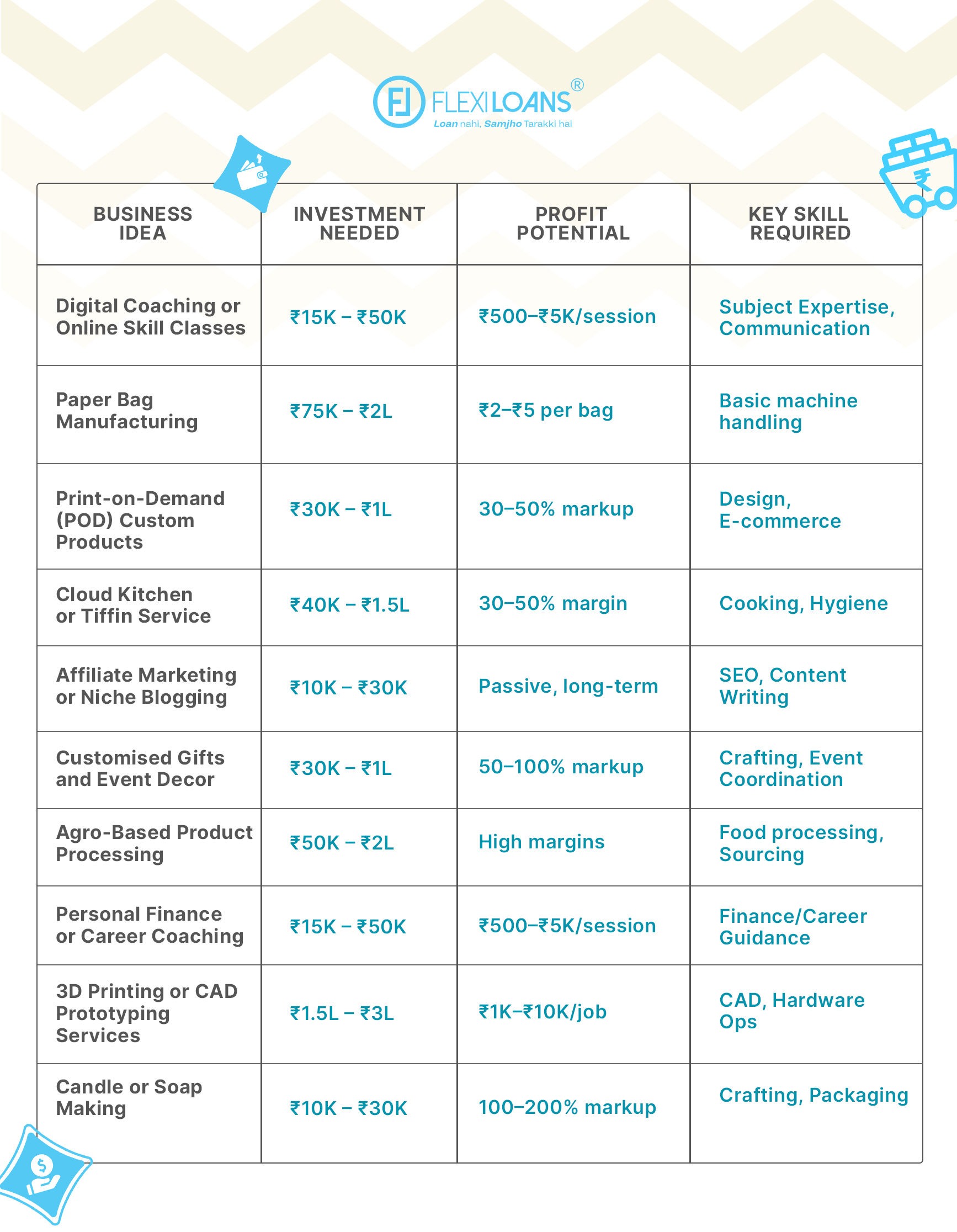
Comparing Top 10 Profitable Business Ideas in India (2026)
How to Decide Which Idea Suits You?
Choosing the right business idea isn’t just about what’s trending; it’s about aligning the opportunity with your personal and financial readiness. Here’s a structured approach to help you decide:
Ask Yourself:
- How much can I realistically invest upfront?
If your budget is under ₹50,000, digital services, affiliate marketing, or candle-making may be safer options.
- What are my strongest skills?
If you’re good with numbers and advice, consider coaching or finance consulting. If you’re hands-on, think about manufacturing or food.
- Do I want a solo venture or team-based operations?
Service-based ideas can be managed solo; kitchens or decor may need a small team.
- How soon do I need returns?
Digital coaching or cloud kitchens often provide faster ROI, while agro-processing may take time to build distribution.
Evaluation Checklist:
| Criteria | Low-Capital Ideas | High-Return Ideas | Scalable Long-Term Ideas |
| Investment Budget | Under ₹50K | ₹50K – ₹2L | ₹1L+ |
| Risk Appetite | Low | Medium | High |
| Skill Requirements | Moderate | High | Advanced (e.g. 3D printing) |
| Time to Break Even | 3–6 months | 6–12 months | 12+ months |
Match the business idea to your lifestyle and risk comfort, not just profit margins. The best MSME founders build where their skills meet demand.
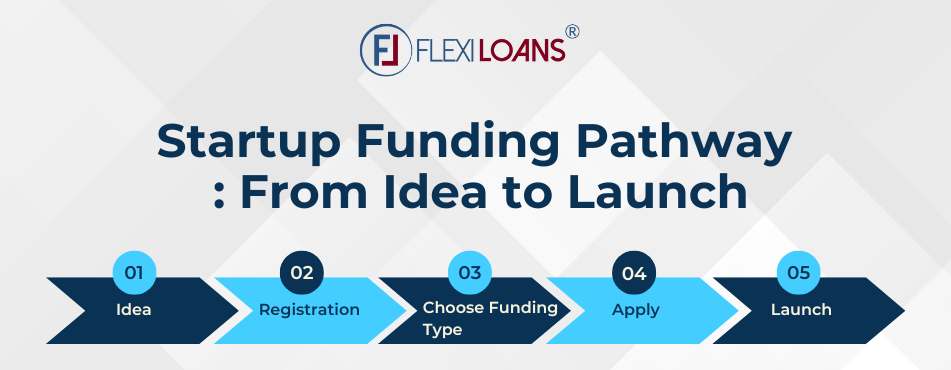
Funding and Support Options for MSME Startups
Once you’ve chosen a business idea, the next step is figuring out how to fund it. Fortunately, India offers a growing ecosystem of government schemes, non-banking financial institutions (NBFCs), and startup incubators that can support MSME ventures at every stage.
Government Schemes for MSMEs
- CGTMSE (Credit Guarantee Fund Trust for Micro & Small Enterprises)
Offers collateral-free loans up to ₹2 crore through approved lenders, ideal for startups without fixed assets.
Tip: Apply via a registered NBFC or bank; having a Udyam MSME certificate boosts approval chances. - PMEGP (Prime Minister’s Employment Generation Programme)
Grants subsidies up to 35% of the project cost for setting up new micro-enterprises in manufacturing and services, especially in rural areas. - ASPIRE Scheme
Grants of ₹75 lakh to ₹1 crore for institutions to set up incubators. If you’re building a product with rural impact, this could support your training or infrastructure needs.
Related: ASPIRE Scheme for MSMEs
NBFC Business Loans
FlexiLoans offers fully digital MSME loans tailored for early-stage founders:
- No collateral needed
- Loan amounts from ₹50,000 to ₹50 lakhs
- Fast approval (within 48–72 hours)
- Minimal documentation
Related: NBFC Business Loans
Incubators & Support Hubs
- Government-backed incubators (via ASPIRE, Atal Innovation Mission)
- Sector-specific startup accelerators (e.g., agri-tech, fintech)
- Local business development centres or NGOs
Common Mistakes to Avoid When Starting a Profitable Business
Even the best business idea can fail if you make the wrong decisions early on. Avoid these common MSME startup pitfalls that can derail your profitability before you get started:
1. Skipping Market Research
Launching a business without validating demand is one of the biggest mistakes. Many first-time founders assume interest based on personal opinions or anecdotal evidence.
Tip: Use free tools like Google Trends, Instagram polls, or neighbourhood surveys to test real-world interest.
2. Undervaluing Capital Requirements
Starting with inadequate working capital can choke operations. Many MSMEs run out of cash within six months.
Tip: Always budget at least 20–30% more than your initial estimate. Include marketing, supplier credit, and emergency reserves.
3. Ignoring Registration & Compliance
Skipping MSME registration or GST (when applicable) can limit your access to funding and bulk buyers.
Tip: MSME registration is free and takes less than 15 minutes. It opens doors to subsidies, loans, and formal credibility.
Read More: How to Download MSME Certificate
4. Not Tracking Business Metrics
If you don’t monitor basic metrics like cash flow, customer acquisition cost, or inventory turnover, your profits can quietly disappear.
Tip: Use free tools like Zoho Books, Tally, or even Google Sheets for simple bookkeeping.
5. Delaying Formal Funding
Relying only on personal savings or informal borrowing limits your growth.
Tip: MSME loans from NBFCs like FlexiLoans are unsecured and quick to process — perfect for scaling efficiently.
Related: FlexiLoans MSME Loan
Final Thoughts: Turn Your Profitable Idea into a Scalable MSME
India’s evolving economic landscape and digital access make 2026 an ideal year to start your own MSME venture. Whether it’s a cloud kitchen, digital coaching, or eco-friendly product manufacturing, success depends not just on the idea but on how well you plan, validate, fund, and execute.
The most profitable MSME businesses aren’t just low-cost, they’re resilient, niche-driven, and adaptable to changing markets.
From securing your MSME registration to choosing the right funding partner like FlexiLoans, every step can be a growth enabler.
FAQs
Some top profitable ideas include digital coaching, tiffin services, paper bag manufacturing, affiliate blogging, and 3D printing. These offer high ROI with low to moderate investment.
You can start many profitable MSME ideas with ₹30,000 to ₹2 lakhs, depending on the business type and your use of digital tools.
Agro-processing (e.g., spices, pickles), candle/soap making, and skill-based services like mobile repair or tailoring are excellent for rural markets.
No. MSME ideas span manufacturing, services, and digital businesses — from e-commerce to coaching, from decor to product packaging.
While not mandatory, registering as an MSME via the Udyam portal provides benefits like subsidies, loans, and protection under delayed payment laws.
Yes. Government schemes (like CGTMSE), NBFCs like FlexiLoans, and incubators (via the ASPIRE scheme) offer financial support without collateral.
Digital MSMEs often offer faster scalability and lower overheads. However, niche traditional businesses (like custom gifting or food) can be highly profitable with strong local demand and online presence.
Glossary: Key Terms Explained
| Term | Definition |
| MSME | Micro, Small, and Medium Enterprises. In India, classified based on investment (up to ₹50 crore) and turnover (up to ₹250 crore). |
| CGTMSE | Credit Guarantee Fund Trust for Micro and Small Enterprises. Offers collateral-free loans through partner banks and NBFCs. |
| NBFC | Non-Banking Financial Company. A financial institution that offers loans and other services without being a bank. |
| POD (Print-on-Demand) | A business model where customised products (like T-shirts or mugs) are printed only after an order is placed. |
| Cloud Kitchen | A delivery-only kitchen setup without a dine-in facility usually runs through food delivery apps. |
| ROI (Return on Investment) | A profitability ratio that calculates the gain or loss generated on an investment relative to its cost. |
| Working Capital | The money required to manage daily business operations like inventory, salaries, and bills.. |
| PMEGP | Prime Minister’s Employment Generation Programme — a credit-linked subsidy scheme to assist individuals in setting up micro-enterprises. |
| ASPIRE Scheme | A government initiative to promote rural entrepreneurship through financial support for business incubators and innovation hubs. |
Is this information helpful?
 Disclaimer

Nishit Bhandari
Nishit Bhandari is a finance professional and content strategist at FlexiLoans. He focuses on MSME, business, and term loan solutions. With over 5 years of expertise in digital lending and credit access, he creates content that helps entrepreneurs make informed financial decisions. His work is driven by a passion to simplify complex finance concepts and empower small businesses to grow with confidence. Nishit holds an MBA in Finance from NMIMS, Mumbai, and is a Certified Credit Professional from IIBF.
Recent Posts
-
Business Loan Refinancing: Lower Your EMI & Interest Rate in 2026
Mar 05, 2026 -
Business Loan Maximum Amount: How Much Can MSMEs Borrow in 2026?
Mar 04, 2026 -
7 Government Schemes to Empower Women in India
Mar 03, 2026 -

Success Stories: How FlexiLoans Helped MSMEs Unlock Their Growth Potential
Feb 24, 2026 -
10 Smart Ways to Use MSME/SME Loans to Expand Your Business
Feb 23, 2026