
A practical guide to help new entrepreneurs secure their first business loan with confidence
Authored by FlexiLoans | Date: 11/02/2026
- Quick Summary
- What: Business loans designed specifically for new entrepreneurs to fund startup costs, working capital, equipment, and early-stage growth.
- Why: To help first-time business owners access formal funding without relying solely on personal savings or informal borrowing.
- Who: New entrepreneurs, first-time founders, sole proprietors, and early-stage business owners.
- How: Understand eligibility, documentation, and loan types, and follow a step-by-step online application process with digital lenders like FlexiLoans.
- Use Case: A first-time entrepreneur secures funding to launch operations, purchase equipment, and manage initial cash flow during the first year of business.
Starting a business is an exciting milestone, but it also comes with financial pressure. New entrepreneurs often need capital to register their business, buy equipment, hire staff, manage inventory, or cover early operating expenses. For beginners, navigating the business loan application process can feel overwhelming.
This is where new entrepreneur business loans play a crucial role. Digital NBFCs like FlexiLoans have simplified access to funding by offering collateral-free loans, minimal documentation, and fast online approvals. These loans help new entrepreneurs move from idea to execution without unnecessary delays.
This step-by-step guide explains how new entrepreneurs can apply for a business loan in 2026, what lenders look for, and how to improve their chances of approval.
What Is a Business Loan for New Entrepreneurs?
A business loan for new entrepreneurs is a formal financing solution designed for individuals who are starting or have recently started a business. These loans help fund early-stage expenses without requiring years of operating history.
Loan approval is generally assessed based on:
- Business plan and purpose of funding.
- Personal credit score of the entrepreneur.
- Initial turnover or projected cash flow.
- Industry type and risk profile.
Common uses include:
- Business registration and setup costs.
- Equipment or machinery purchase.
- Initial inventory stocking.
- Marketing and customer acquisition.
- Working capital for day-to-day expenses.
Why Do New Entrepreneurs Need Business Loans?
New businesses typically face higher upfront costs and slower initial revenue. Business loans help entrepreneurs:
- Launch Operations Faster. Secure funds to start without long delays.
- Preserve Personal Savings. Avoid exhausting personal finances.
- Build Business Credit History. Establish credibility with formal lenders.
- Manage Early Cash Flow Gaps. Cover expenses before revenues stabilize.
- Invest in Growth Early. Marketing, branding, and technology adoption.
- Handle Unexpected Expenses. Prepare for unforeseen operational costs.
What Are the Key Benefits of Business Loans for New Entrepreneurs?
Business loans offer several advantages to beginners entering the market:
- No or Limited Collateral Requirements: Many loans are unsecured or partially secured.
- Fast Digital Approvals: Online lenders process applications quickly.
- Flexible Loan Amounts: Funding aligned with startup needs.
- Minimal Documentation: Simplified KYC and financial checks.
- Structured Repayments: EMIs planned to match early-stage cash flow.
- Business Credit Building: Timely repayment improves future borrowing capacity.
- Professional Financial Discipline: Encourages structured financial management.
These benefits make business loans a strategic tool for new entrepreneurs aiming for sustainable growth.
What are the Eligibility Criteria and Required Documents?
Eligibility Criteria:
- An Indian citizen aged between 21 and 65.
- Registered business entity or sole proprietorship.
- Clear business purpose and funding requirement.
- Personal CIBIL score typically above 700+.
- Minimum operational or projected income (varies by lender).
Required Documents:
- PAN and Aadhaar of the entrepreneur.
- Business registration certificate or proof of ownership.
- Bank account statements (personal or business).
- Business plan or funding usage details.
- GST registration, if applicable.
What Are the Average Interest Rates for New Entrepreneur Loans in 2026?
| Lender Type | Typical Interest Rate (p.a.) | Suitable For |
| Public Banks | 11% - 15% | Businesses with government scheme support |
| Private Banks | 13% - 18% | Early-stage firms with strong profiles |
| NBFCs & Fintechs | 15% - 26% | New entrepreneurs needing quick funding |
At FlexiLoans, rates start from 1% per month, depending on credit profile, business potential, and repayment capacity.
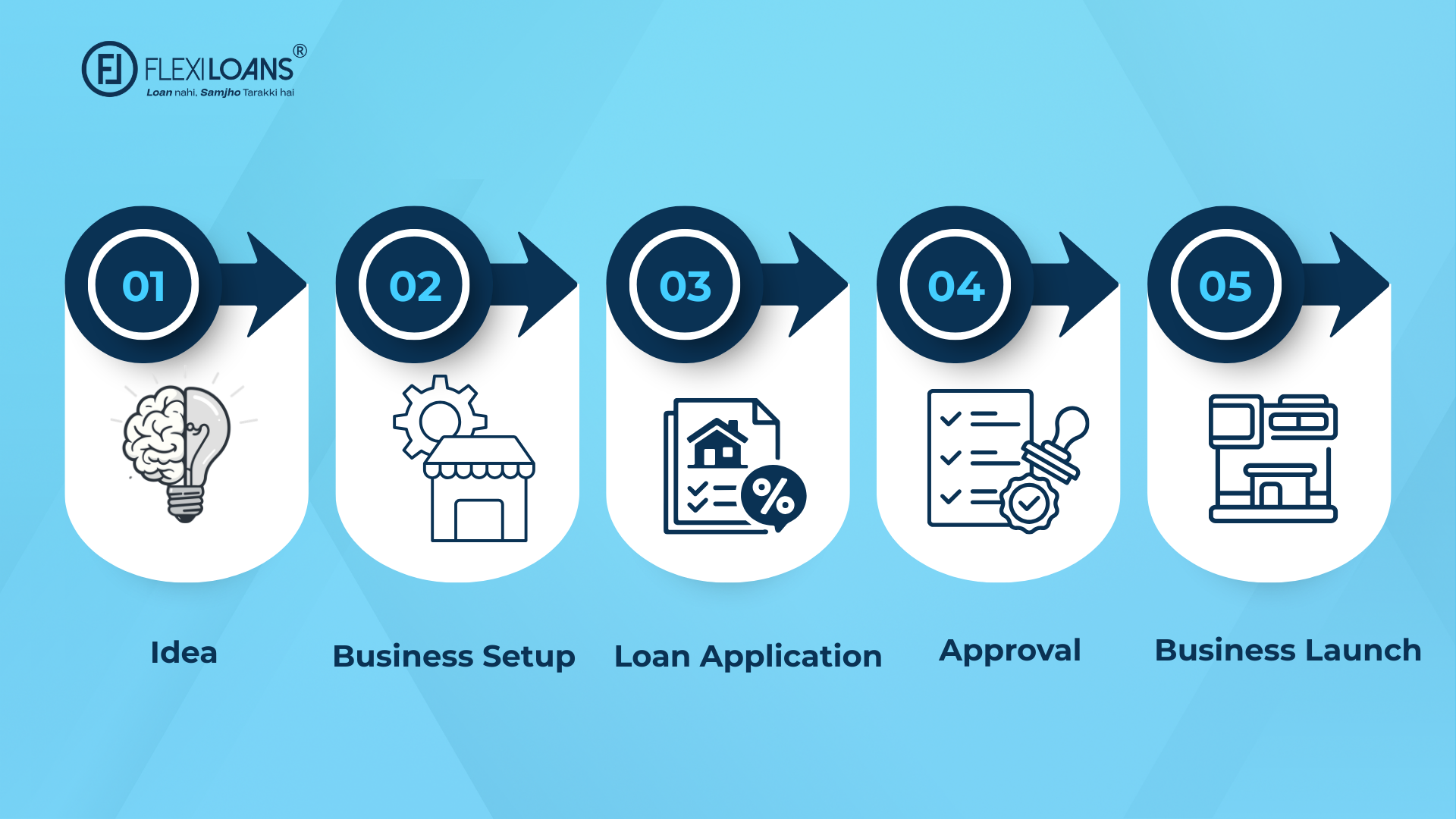
How to Apply for a New Entrepreneur Business Loan: Step-by-Step
- Register Your Business. Complete proprietorship or entity registration.
- Define the Loan Purpose. Clearly outline how funds will be used.
- Check Your Credit Score. Improve it if required before applying.
- Choose the Right Lender. Digital NBFCs like FlexiLoans are beginner-friendly.
- Decide the Loan Amount. Avoid over-borrowing in the early stages.
- Prepare Documents. Keep KYC, bank statements, and business proofs ready.
- Apply Online. Submit a digital application for faster processing.
- Receive Approval and Disbursal. Funds are credited within 24-72 hours.
Why Choose FlexiLoans as a New Entrepreneur?
- Beginner-Friendly Eligibility. Designed for first-time business owners.
- Fast Digital Disbursement: Funding within 24-72 hours.
- Collateral-Free Options: No need to pledge assets.
- Minimal Documentation: Simple, paperless application.
- Transparent Pricing: No hidden charges.
- Flexible EMIs: Repayment aligned with business cash flow.
- Ongoing Support: Guidance throughout the loan lifecycle.
What Are the Pro Tips to Improve Loan Approval Chances?
- Maintain a strong personal credit score.
- Keep a clear and realistic business plan.
- Start with a modest loan amount.
- Maintain consistent bank transactions.
- Register under Udyam or GST, if applicable.
- Explore government-backed schemes like CGTMSE.
- Ensure accurate documentation to avoid delays.
Business loans enable new entrepreneurs to turn ideas into reality by providing structured, timely capital without relying solely on personal savings.
Conclusion
A business loan can be a powerful starting point for new entrepreneurs looking to establish and grow their ventures. With simplified digital lending, collateral-free options, and fast approvals, funding is no longer a barrier for first-time founders.
With FlexiLoans, new entrepreneurs can access reliable capital, build credit, and scale their businesses with confidence.
FAQs: New Entrepreneur Business Loans
Ans: Yes. Many lenders today evaluate new entrepreneur loan applications based on the founder's personal credit score, educational or professional background, business plan, and income potential. Digital lenders like FlexiLoans focus on cash flow potential rather than long operating histories, making loans accessible to first-time founders.
Ans: No. Several business loans for new entrepreneurs are collateral-free. These unsecured loans do not require pledging property, machinery, or personal assets. Approval is primarily based on creditworthiness, business viability, and repayment capacity.
Ans: Loan amounts for new entrepreneurs typically range from ₹50,000 to ₹50 lakh. The amount of the sanctioned loan depends on factors such as credit score, business type, projected turnover, and loan purpose.
Ans: With digital NBFCs like FlexiLoans, loan approvals and disbursals can happen within 24-72 hours, provided documentation and eligibility requirements are met. Traditional banks may take longer due to manual verification processes.
Ans: GST registration is not mandatory for all new entrepreneurs. However, having GST registration enhances credibility and eligibility, especially for businesses that supply goods or taxable services. It can also help lenders assess turnover more accurately.
Ans: Yes. Freelancers, consultants, and self-employed professionals can apply for business loans if they operate as sole proprietors and have a stable income stream. Maintaining proper bank records and tax filings improves the chances of approval.
Ans: A personal CIBIL score of 700+ is generally considered favourable. A higher score improves approval chances and may help secure better interest rates and loan terms.
Ans: Yes. Schemes such as CGTMSE offer credit guarantees for collateral-free loans, thereby reducing lenders’ risk. Many banks and NBFCs align their offerings with these schemes to support first-time business owners.
Glossary: Key Terms Explained
| Term | Definition |
| New Entrepreneur | An individual starting a business for the first time or operating a newly established venture. |
| Business Loan | A financing facility provided to fund business operations, expansion, or working capital needs. |
| Collateral-Free Loan | A loan that does not require the pledging of assets, such as property or equipment, as security. |
| Unsecured Loan | A loan approved without collateral, based on creditworthiness and repayment capacity. |
| NBFC | A Non-Banking Financial Company that provides loans and financial services outside traditional banking. |
| CIBIL Score | A credit score ranging from 300 to 900 that reflects an individual's credit history and reliability. |
| Working Capital | Funds used to manage daily business expenses such as rent, salaries, and inventory. |
| Loan Tenure | The duration over which a borrower must repay the loan. |
| EMI | Equated Monthly Instalment paid by the borrower to repay the loan over time. |
| Business Plan | A structured document outlining business objectives, revenue model, and growth strategy. |
| GST | Goods and Services Tax applies to the supply of goods and services in India. |
| Udyam Registration | Government registration that officially recognises a business as an MSME. |
| Digital Lender | An online lending platform offering quick loan approvals with minimal paperwork. |
| Disbursal | The process of transferring the approved loan amount to the borrower's bank account. |
| Credit History | A record of past borrowing and repayment behaviour used by lenders to assess risk. |