
Launch Your Venture with Low-Investment, High-Growth Ideas Backed by MSME Support & FlexiLoans Funding
Authored By FlexiLoans | Date: 02/01/2026
- Quick Summary
- What: 15 realistic, low-investment MSME ventures, both product and service-based
- Why: Ideal for entrepreneurs seeking viable, scalable options in India
- Who: Best suited for first-time founders, small-town startups, or those with ₹20K–₹2L capital
- How: We list each idea with startup steps, basic investment range, key tools, and profit potential
- Use case: Perfect as a brainstorming guide, business plan input, or FlexiLoans product linkage
Looking to start a business with low investment and high growth potential in India? You’re not alone. MSMEs (Micro, Small, and Medium Enterprises) are the backbone of the Indian economy, offering accessible opportunities for entrepreneurs like you.
Whether you’re a first-time founder or a side-hustler ready to scale, this blog explores profitable MSME business ideas tailored for 2026, along with tips on choosing the right venture and navigating essential government support schemes.
Why Start an MSME in India in 2026?
India’s MSME sector plays a vital role in employment generation and economic contribution. With over 11 crore people employed and a nearly 30% share in GDP, the ecosystem is well-established. In 2026, more entrepreneurs will be exploring MSMEs due to digital growth, evolving consumer demands, and improved access to information and tools.
These MSMEs provide a manageable pathway with scalable potential, especially when combined with the right funding and guidance.
Key Advantages of MSMEs
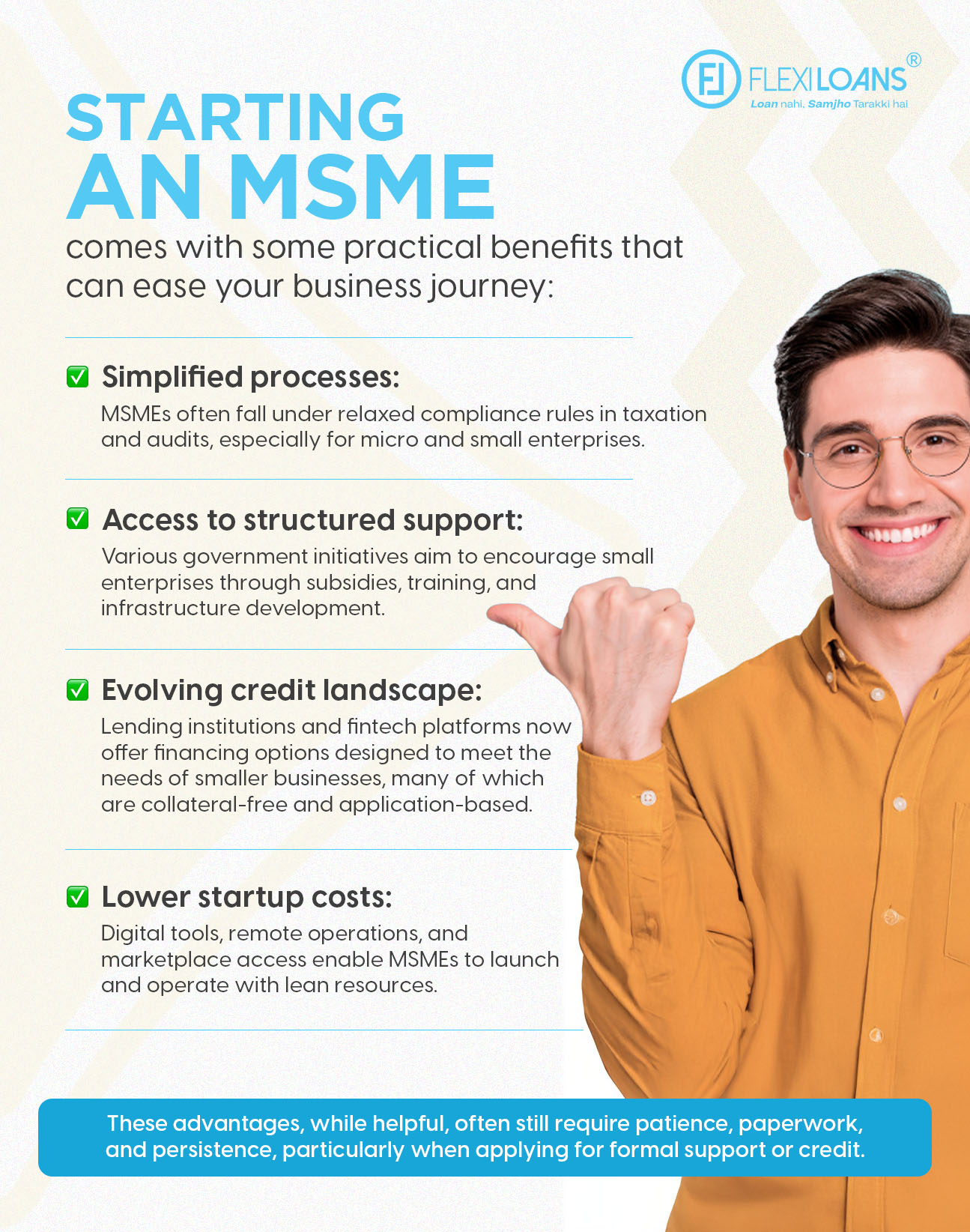
Starting an MSME comes with some practical benefits that can ease your business journey:
- Simplified processes: MSMEs often fall under relaxed compliance rules in taxation and audits, especially for micro and small enterprises.
- Access to structured support: Various government initiatives aim to encourage small enterprises through subsidies, training, and infrastructure development.
- Evolving credit landscape: Lending institutions and fintech platforms now offer financing options designed to meet the needs of smaller businesses, many of which are collateral-free and application-based.
- Lower startup costs: Digital tools, remote operations, and marketplace access enable MSMEs to launch and operate with lean resources.
These advantages, while helpful, often still require patience, paperwork, and persistence, particularly when applying for formal support or credit.
Government Support & Schemes
The government has launched several schemes intended to make it easier for MSMEs to grow. These businesses may be eligible for tax benefits, participation in public tenders, and access to certain credit programmes.
Some commonly known schemes include:
- CGTMSE: Designed to extend collateral-free credit through member banks and institutions. However, actual disbursal depends on lender criteria and may require follow-ups.
- Startup India Seed Fund: Supports early-stage ventures in areas like product development or proof of concept. Funding timelines and conditions vary.
- MUDRA Loans: Offered under the Pradhan Mantri Mudra Yojana, these cater to micro and small enterprises with loan slabs ranging from ₹50,000 to ₹10 lakhs.
These schemes provide support to many MSMEs, yet you may experience slower processing or strict paperwork requirements. That’s why exploring alternative funding routes, such as digital lenders, can complement your growth journey.
If you’re just starting, getting your MSME registration through the Udyam portal is the first step to unlocking these benefits and qualifying for both public and private funding.
New MSME founders often face decision paralysis due to the overwhelming number of possibilities. Having realistic parameters, like capital needs and required tools, can help filter options more effectively.
What are The Top 15 MSME Business Ideas in India for 2026
Choosing the right business idea is often the biggest hurdle for aspiring entrepreneurs. The MSME space in India is vast, ranging from traditional manufacturing to modern digital services. What matters is finding something that aligns with your skills, budget, and market demand.
To help you get started, here are 15 low-investment MSME business ideas, segmented by category, with each offering growth potential and practical implementation tips.
| Manufacturing Business Ideas | Service-Based Business Ideas | Digital & Online MSME Ideas |
| Home Bakery | Tiffin or Meal Delivery | E-commerce for Local Products |
| Paper Bag Manufacturing | Daycare or Creche | Online Tuition or Coaching |
| Candle or Soap Making | Mobile/Computer Repair Service | YouTube Channel or Podcast |
| Incense Stick (Agarbatti) Unit | Digital Marketing Services | Print-on-Demand Business |
| Handmade Pickles & Snacks Unit | Event or Wedding Planning | Affiliate Marketing Website |
Manufacturing Business Ideas
1. Home Bakery
Startup Steps:
- Register with FSSAI for food safety
- Purchase basic baking tools: oven, tins, whisk
- Develop a standard menu (cakes, breads, muffins)
- Promote on Instagram and join food delivery apps
Estimated Investment: ₹20,000–₹50,000
Profitability: High during festivals, events, gifting
Tools Needed: Oven, mixer, packaging materials, camera/phone for promotion
2. Paper Bag Manufacturing
Startup Steps:
- Invest in a semi-automatic bag machine
- Source recycled kraft paper in bulk
- Build B2B leads among retailers and grocery stores
Estimated Investment: ₹75,000–₹2 lakhs
Profitability: Growing demand due to plastic ban
Tools Needed: Bag machine, paper rolls, die cut tools
3. Candle or Soap Making
Startup Steps:
- Learn soap or candle basics via YouTube or courses
- Buy moulds, wax, oils, and fragrance kits
- Sell through fairs, Instagram, and gifting platforms
Estimated Investment: ₹30,000–₹70,000
Profitability: High in niche markets (organic, aromatic, festive)
Tools Needed: Moulds, boiler, oils, packaging
4. Incense Stick (Agarbatti) Unit
Startup Steps:
- Purchase a small machine (manual/semi-auto)
- Mix raw ingredients like charcoal powder, perfume, jigat
- Target temple vendors and export agents
Estimated Investment: ₹60,000–₹1.5 lakhs
Profitability: Steady demand year-round
Tools Needed: Machine, drying racks, essential oils
5. Handmade Pickles & Snacks Unit
Startup Steps:
- Register under FSSAI and get a basic trade licence
- Use local recipes to produce in small batches
- Distribute via kirana stores, exhibitions, and online
Estimated Investment: ₹40,000–₹1 lakh
Profitability: High margins if niche or traditional flavour
Tools Needed: Mixing tools, packaging jars, cooking equipment
Service-Based Business Ideas
6. Tiffin or Meal Delivery
Startup Steps:
- Set a fixed vegetarian/non-veg menu
- Register on Swiggy, Zomato, or target office lunch clients
- Focus on taste, consistency, and timely delivery
Estimated Investment: ₹30,000–₹1 lakh
Profitability: Daily recurring income with low overheads
Tools Needed: Tiffin boxes, cooking setup, delivery tie-ups
7. Daycare or Creche
Startup Steps:
- Rent or convert space with safety protocols
- Hire helpers and maintain hygiene standards
- Target working parents in your locality
Estimated Investment: ₹50,000–₹2 lakhs
Profitability: Consistent demand in urban areas
Tools Needed: Mats, toys, safety equipment, CCTV
8. Mobile/Computer Repair Service
Startup Steps:
- Get certified through a tech training course
- Set up a small booth or mobile van service
- Partner with accessories vendors for cross-selling
Estimated Investment: ₹20,000–₹80,000
Profitability: High in Tier 2/3 cities with less competition
Tools Needed: Toolkits, soldering tools, multimeter
9. Digital Marketing Services
Startup Steps:
- Learn SEO, Meta/Facebook Ads, and content creation
- Create a service page or LinkedIn profile
- Start with local shops, education centres, clinics
Estimated Investment: ₹30,000–₹1 lakh
Profitability: Monthly retainers possible with 3–5 clients
Tools Needed: Laptop, internet, Canva, SEM tools
10. Event or Wedding Planning
Startup Steps:
- Create a vendor list (decorators, caterers, venues)
- Build a portfolio through small functions
- Expand through word of mouth and social media ads
Estimated Investment: ₹40,000–₹1.5 lakhs
Profitability: High, especially during peak seasons
Tools Needed: Laptop, camera, contacts, negotiation skills
Digital & Online MSME Ideas
11. E-commerce for Local Products
Startup Steps:
- Source handicrafts, fabrics, or regional goods
- Set up a Shopify store or sell via Amazon
- Run Instagram and WhatsApp campaigns
Estimated Investment: ₹50,000–₹1.5 lakhs
Profitability: High if export demand is identified
Tools Needed: Website, packaging, logistics partner
12. Online Tuition or Coaching
Startup Steps:
- Choose a niche (school subjects, competitive exams, soft skills)
- Use Zoom or Google Meet to conduct classes
- List yourself on portals like UrbanPro, SuperProf
Estimated Investment: ₹10,000–₹30,000
Profitability: High margins with repeat students
Tools Needed: Laptop, webcam, digital whiteboard
13. YouTube Channel or Podcast
Startup Steps:
- Choose a niche (finance, food, crafts)
- Invest in a mic, lighting, editing software
- Monetise through ads, brand partnerships, and merch
Estimated Investment: ₹20,000–₹1 lakh
Profitability: Long-term income source
Tools Needed: Camera/phone, mic, editing tools
14. Print-on-Demand Business
Startup Steps:
- Set up shop on platforms like Printrove, VistaPrint
- Design custom T-shirts, mugs, notebooks
- Focus on youth, regional quotes, or fandom-based products
Estimated Investment: ₹25,000–₹70,000
Profitability: Moderate to high depending on niche
Tools Needed: Design software, platform integration
15. Affiliate Marketing Website
Startup Steps:
- Build a blog targeting specific search topics
- Sign up for affiliate programmes (Amazon, Flipkart, SaaS tools)
- Monetise via product recommendations
Estimated Investment: ₹10,000–₹30,000
Profitability: Passive income potential
Tools Needed: Website, SEO tools, keyword planner
How to Evaluate and Select the Right MSME Idea?
Identifying a business idea is only the first step. Now, what matters more is finding the right one for your skills, budget, and market environment. Here’s how to critically assess your options and make an informed, confident decision.
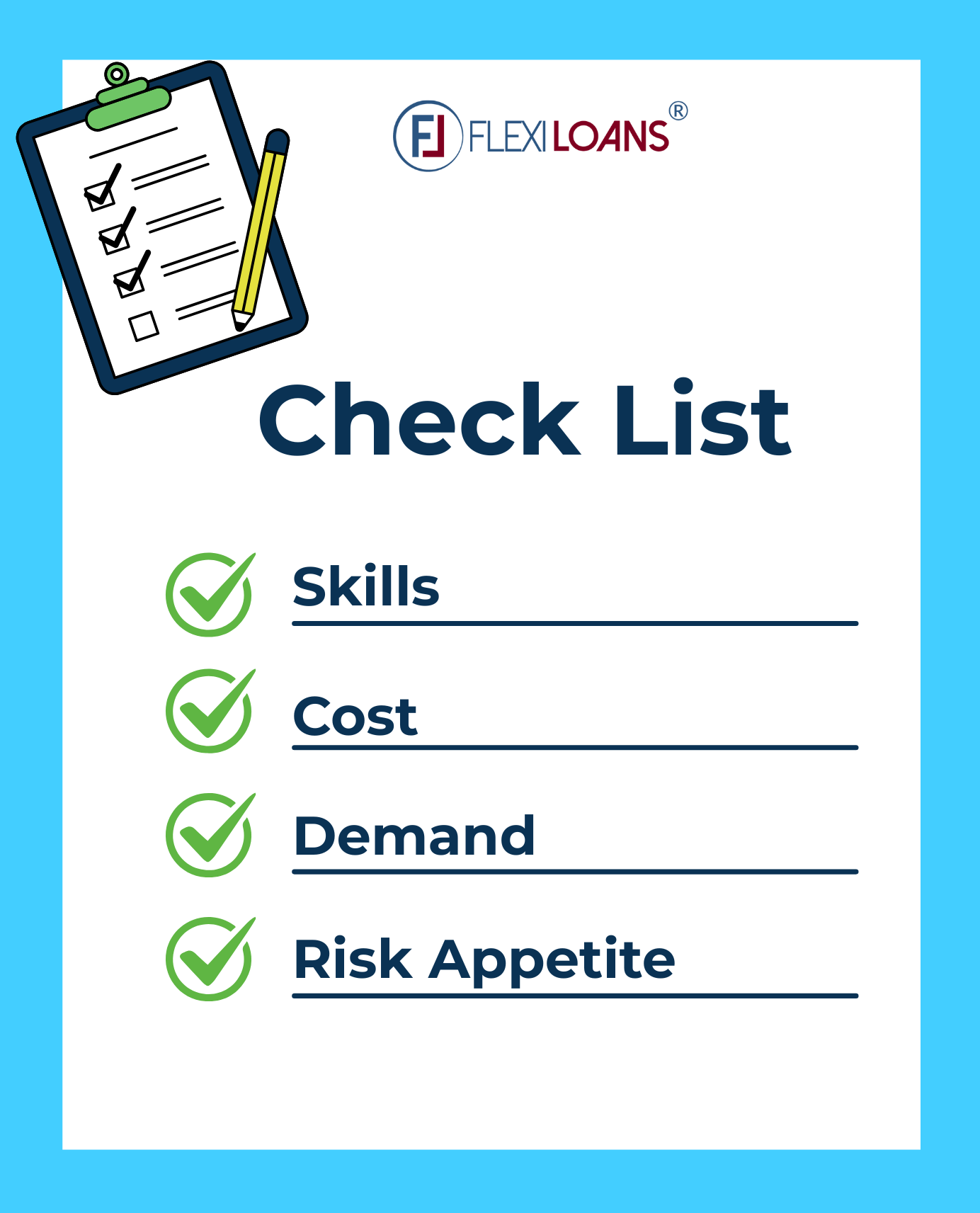
- Step 1: Match with Your Skills & Interest
Select an idea that matches your background, daily availability, and willingness to learn. A home bakery may appeal to culinary enthusiasts, while someone with basic IT knowledge may prefer digital marketing or affiliate blogging.
1. Ask yourself: Would I enjoy this work long-term?
2. Consider whether the business is solo-friendly or requires a team from day one. - Step 2: Assess Investment Capacity
Different ideas come with different startup costs, from ₹10,000 to ₹5 lakhs. List out initial and operational costs (equipment, licenses, digital tools) and identify what you can self-fund or finance.
Different ideas come with different startup costs, from ₹10,000 to ₹5 lakhs. List out initial and operational costs (equipment, licenses, digital tools) and identify what you can self-fund or finance.
If your selected idea needs capital beyond personal savings, you can explore a flexible MSME business loan to get started. - Step 3: Understand Market Demand
Validate demand in your city, state, or niche. For example:
1. Is there a gap in services like mobile repair or daycare?
2. Are your products already available online? If yes, can you differentiate on quality or packaging?
Use tools like Google Trends, social media hashtags, and B2B marketplaces to estimate interest. - Step 4: Check Profit Margins & Time to Break Even
Estimate how long it’ll take to recover your investment:
1. High-frequency businesses (like tiffin’s) offer quicker returns
2. Niche areas (like print-on-demand or podcasting) may take longer but yield more later
Look for business models where fixed costs are low and scaling is digital-friendly.
Want to estimate how much funding your MSME idea might need? Try the free MSME Loan Calculator to check loan eligibility and EMI instantly
What are The Common Mistakes First-Time MSME Founders Make
Starting a business is exciting, but many first-time MSME entrepreneurs fall into avoidable traps. Here’s what to watch out for to give your business the best chance of success.
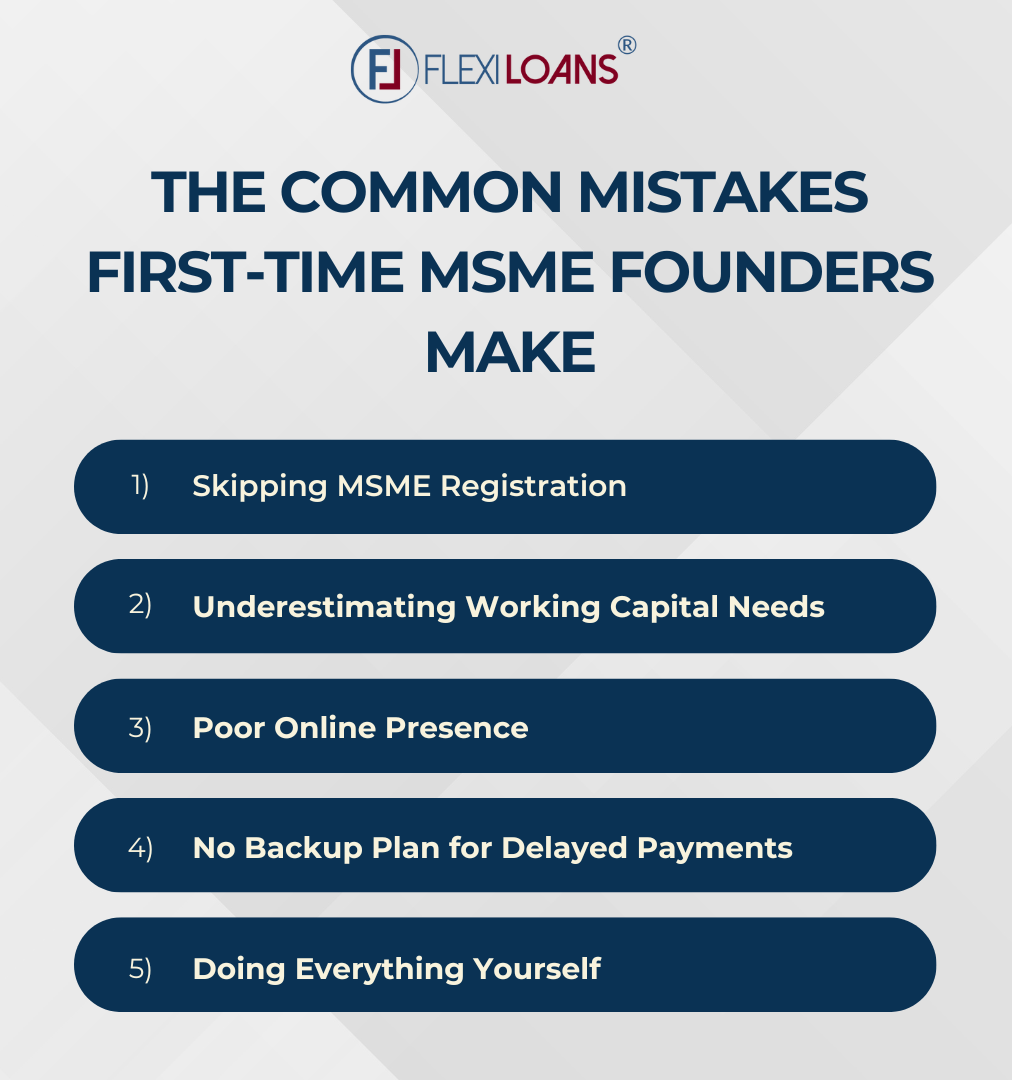
Mistake 1: Skipping MSME Registration
Many businesses delay registering with the Udyam portal, thinking it’s optional. However, registration gives you access to schemes, tenders, and credibility when applying for loans or dealing with vendors.
Mistake 2: Underestimating Working Capital Needs
It’s easy to miscalculate how much money you’ll need to sustain your business beyond the first month. Make a 3–6 month runway plan covering rent, salaries, and reorders, then add a buffer.
When needed, a short-term MSME loan can bridge cash flow gaps without impacting growth plans.
Mistake 3: Poor Online Presence
Even traditional MSMEs today need basic digital visibility. Skipping Google Business registration, WhatsApp promotion, or social media branding can cost you leads.
Investing time in free platforms like Instagram or LinkedIn often pays better than cold calling.
Mistake 4: No Backup Plan for Delayed Payments
Clients, especially B2B, don’t always pay on time. Not accounting for delayed receivables can choke your operations.
Understanding MSME payment rules, such as the 45-day regulation, can help you safeguard your business contracts.
Mistake 5: Doing Everything Yourself
Delegating early doesn’t mean losing control; it means saving time and mental bandwidth. Whether it’s accounting, packaging, or social media, outsourcing key tasks can help you grow sustainably.
Final Thoughts: Turn Your MSME Dream into Action
Starting an MSME in India has never been more promising. Whether you’re drawn to digital ventures, food services, or manufacturing units, there’s an idea that fits your skills and investment range. But success doesn’t just depend on having a great idea—it requires proper planning, documentation, and working capital management.
If you’re looking to fund your MSME without lengthy paperwork or traditional bank hurdles, digital lending platforms like FlexiLoans can help bridge the gap. Their application process is designed for small business owners who want speed, simplicity, and transparency.
FAQs
MSMEs in India are classified based on investment and annual turnover. They include manufacturing and service-based enterprises with turnover up to ₹250 crore and investment up to ₹50 crore.
Many MSMEs can be started with an initial investment of ₹10,000–₹50,000, especially in service and digital sectors. The exact amount depends on the business type.
MSME registration is not mandatory, but it increases your chances of securing loans and accessing government support schemes.
The MSME registration process via the Udyam portal is fully online and can be completed within a few hours if all details are available.
Common reasons include poor planning, weak cash flow, inadequate marketing, and lack of formal registration or access to structured credit.
Top ideas include digital coaching, handmade soaps and candles, cloud kitchens, and e-commerce ventures for regional goods.
Yes. Fintech lenders like FlexiLoans and schemes like CGTMSE offer collateral-free MSME loans for eligible applicants through a simplified online process.
Glossary of Key MSME Terms
| Term | Definition |
| MSME | Micro, Small, and Medium Enterprises classified by investment and turnover. Includes manufacturing and service sectors. |
| Udyam Registration | Online registration for MSMEs under the Ministry of MSME that provides formal recognition and access to benefits. |
| Working Capital | Funds required for the day-to-day operations of a business (e.g., salaries, rent, inventory). |
| CGTMSE | Credit Guarantee Fund Trust for Micro and Small Enterprises – provides collateral-free credit guarantee support to MSMEs. |
| Collateral-Free Loan | A loan that doesn’t require any pledged asset. Available through fintechs and government schemes. |
| TAT | Turnaround Time – the time taken from application to disbursement of a loan. |
| ROI | Return on Investment – a measure of the profitability of a business activity or investment. |