

Simple funding options to expand operations, manage cash flow, and scale faster
- Quick Summary
- What: A guide covering the best ways to raise business funding in India.
- Why: Most businesses need funds to expand, manage working capital, or invest in growth.
- Who: MSMEs, startups, small business owners, and entrepreneurs looking to scale.
- How: By exploring loans, investors, government schemes, crowdfunding, and self-funding options.
- Use Case: Helps you choose the right funding method based on your business stage and goal.
In India, growing a business often requires extra capital. Whether you want to open a new branch, buy machinery, hire staff, or increase inventory, funding plays a major role in business growth.
However, many entrepreneurs struggle to raise funds due to limited collateral, strict loan eligibility, and slow approval timelines. That is why it is important to understand the different business funding options available in India and choose the one that suits your needs.
In this blog, we explain the most practical ways to raise funds for business growth, along with key factors to help you decide the right option.
Understanding the Importance of Funding for Business Growth
Capital plays a critical role in determining a business’s ability to scale, innovate, and sustain operations.
The importance of funding for business extends beyond day-to-day expenses. Adequate capital allows companies to invest in infrastructure, hire skilled professionals, and improve product offerings. Without sufficient funds, businesses risk delaying expansion, missing growth opportunities, or struggling to maintain operations.
Key reasons why businesses need funding in India:
- Expansion and Scaling: Open new locations, expand services, or enter new markets.
- Technology and Innovation: Upgrade systems, adopt new tools, or develop products.
- Inventory and Equipment: Maintain sufficient stock and machinery to meet demand.
- Marketing and Branding: Execute advertising campaigns and digital promotions.
- Working Capital Management: Covers operational costs such as salaries, rent, and utilities.
Top Ways to Raise Funds for Your Business in India
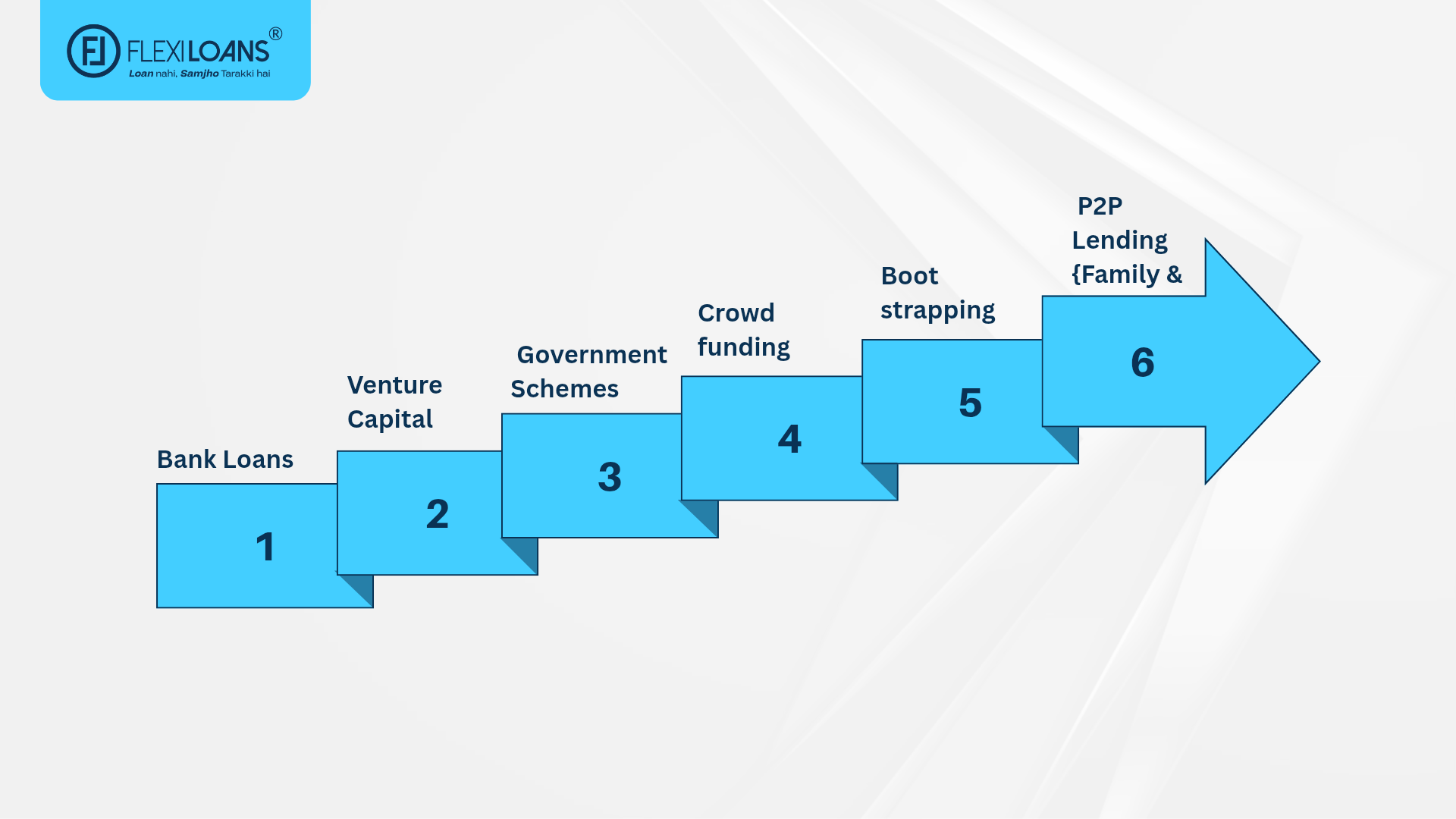
There are numerous ways to raise funds for business; for instance, these range from conventional loans to modern financing techniques. Therefore, business owners must carefully evaluate each option based on eligibility, risk factors, and financial needs.
1. Bank Loans and Financial Institutions
- Structured repayment terms for expansion, equipment, or working capital.
- Pros: Large capital amounts, lower interest rates, fixed repayment.
- Cons: Strict eligibility, collateral requirements, and lengthy approvals.
- Alternative: NBFCs like FlexiLoans offer faster approvals, minimal paperwork, and flexible repayment.
2. Venture Capital and Angel Investors
- Equity-based funding for high-growth potential businesses.
- Pros: Access to large capital, investor guidance, and no repayment.
- Cons: Loss of ownership, investor influence, and high growth expectations.
3. Government Schemes and Grants
- MSME loans, Startup India, Atal Innovation Mission, and more.
- Access capital without repayment obligations.
- How: Check eligibility, submit proposals, and meet compliance requirements.
4. Crowdfunding
- Raise small contributions from multiple investors via platforms like Ketto or Milaap.
- Requires compelling pitch, clear value proposition, and effective marketing.
5. Bootstrapping
- Use personal savings or reinvest profits to grow.
- Pros: Full ownership, no interest, financial discipline.
- Cons: Limited funds, slower growth, higher personal financial risk.
6. Peer-to-Peer (P2P) Lending
- Direct connection between businesses and investors online.
- Platforms like Faircent and Lendbox offer flexible repayment and fast funding.
7. Family and Friends
- Quick access to initial capital.
- Tip: Clearly define terms, draft legal agreements, and maintain transparency.
How to Choose the Right Fundraising Option for Your Business
- Identify Your Business Stage: Startups vs. established companies.
- Define Your Purpose: Working capital, expansion, or maintaining ownership.
- Evaluate Control and Ownership Preferences: Avoid equity funding if you want full ownership.
- Analyse Risk Tolerance: High-growth businesses may accept investor involvement; conservative ones may prefer loans.
- Assess Funding Amount Required: Small amounts → P2P or FlexiLoans; large amounts → venture capital or government grants.
- Consider Speed and Simplicity: Urgent needs → digital lenders; traditional banks → longer timelines.
- Review Terms and Repayment Conditions: Understand interest rates, tenure, and flexibility before committing.
Choosing the right funding option is as important as securing funds. Entrepreneurs must evaluate their business stage, growth ambitions, and risk tolerance to select a financing method that not only fuels expansion but also preserves control and ensures long-term sustainability.
Conclusion
Securing capital is essential for sustainable business growth. Entrepreneurs now have multiple avenues beyond traditional loans, including venture capital, government schemes, crowdfunding, and digital lending platforms like FlexiLoans. By understanding your business needs, risk tolerance, and funding goals, you can choose the right strategy to scale operations efficiently and strengthen long-term success.
FAQs
Ans: Angel investors, venture capital, government schemes, crowdfunding, and bootstrapping.
Ans: Submit required documents, such as financial statements, business plans, and tax records, to banks or digital lenders.
Ans: Yes, especially for early-stage businesses seeking smaller contributions from multiple backers.
Ans: MSME loans, the Startup India program, and the Atal Innovation Mission provide grants, loans, and support.
Ans: Yes, options like bank loans, P2P lending, and bootstrapping allow you to retain full control.
Ans: Typically: financial statements, business plan, tax records, KYC documents, and collateral details (if applicable).
Ans: Assess business stage, capital requirement, risk tolerance, ownership preference, and urgency for funds.